
Part 1 of 9
Chapter 1: The Great Commission: Our Foundational Mission
At the heart of the church’s calling is Jesus’ final instruction before His ascension: the Great Commission (Matthew 28:18–20). This is not just a farewell—it is the central mission of every believer and every local church. It is a three-part call:
- To Go and evangelize,
- To Baptize as a public and spiritual initiation into God’s family,
- To Teach others to obey everything Christ has commanded.
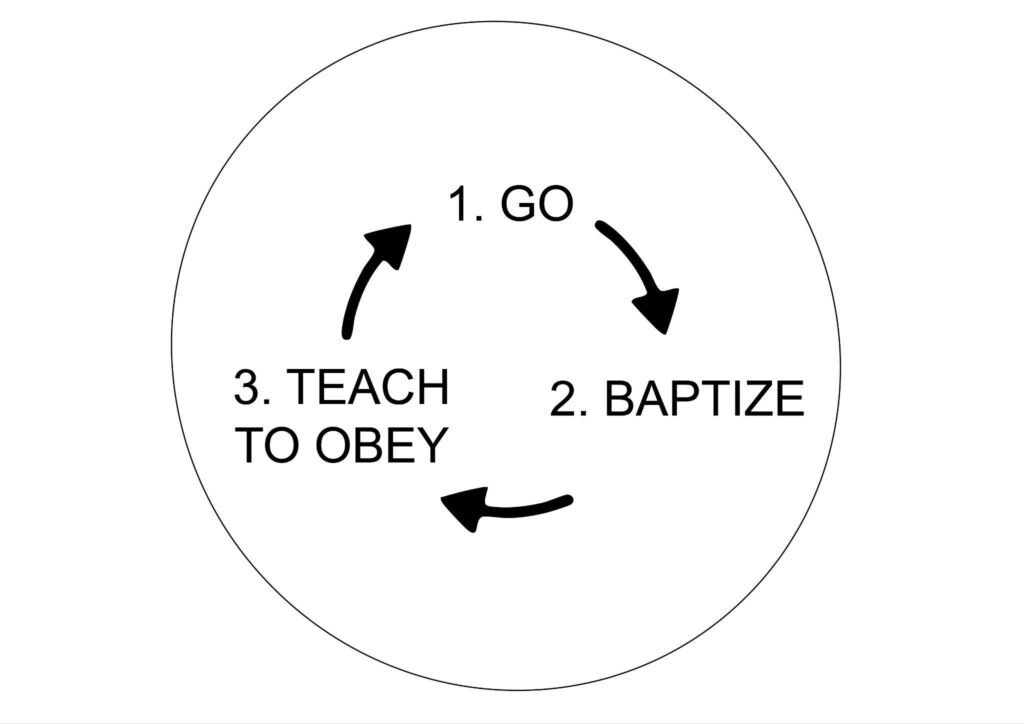
This is not a call to passive attendance or mere conversion, but to intentional, relational, and reproducible disciple-making. This commission is further echoed in Mark 16:15 and Luke 24:47. We are not called to simply grow churches but to multiply obedient followers of Jesus.
From Redemption To Discipleship
In the simplest possible terms, there are two basic themes in the New Testament:
- How the lost are redeemed by God.
- How the redeemed must live for God.
Many New Testament passages reflect these including: 2 Peter 3:9; 2 Timothy 2:1-4; Romans 5:8; John 3:16; Luke 19:10; Romans 10:9-13; Acts 17: 24-31; Revelation 7:9-10.
Salvation is only the beginning. After a person is redeemed, he or she is expected to live in a way that brings glory to God. God calls believers to grow into maturity (Ephesians 4:11-13; Colossians 3:1-17; Colossians 2:6; Colossians 1:28–29; Galatians 4:19, Ephesians 5:1-2) speak to the believer’s transformation.
A disciple is not just someone who believes but someone who becomes like their Master (Luke 6:40). Discipleship means walking with Christ daily, surrendering self, and growing into maturity. This transformation is fueled by obedience, not just information (James 1:22–25).
Power from the Holy Spirit
Jesus told His disciples to wait in Jerusalem until they were "clothed with power from on high" (Luke 24:49). Acts 1:8 affirms that it is the Holy Spirit who enables us to be witnesses.
The Spirit empowers preaching (Acts 2), heals through the apostles (Acts 3), and emboldens them under persecution (Acts 4). Without the Spirit, discipleship becomes a dry task; with Him, it becomes a divine partnership (Galatians 5:22–23, 1 Corinthians 2:4–5). Every great disciple-making movement begins not with strategy, but with surrender.
The Four Circles of Discipleship
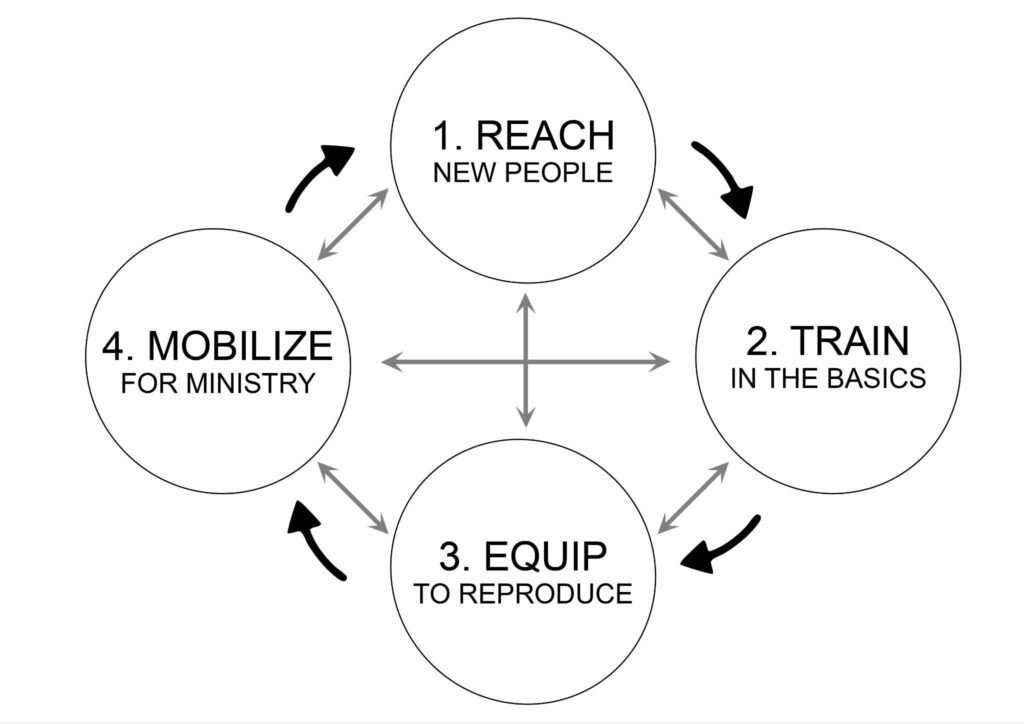
Discipleship follows four stages:
- Reach new people through evangelism (Matthew 9:36–38)
- Train in foundational faith (Hebrews 6:1–2)
- Equip to reproduce (2 Timothy 2:2)
- Minister in calling and gifts (Romans 12:4–8, 1 Peter 4:10–11)
This visual shows that disciple-making is not linear but ongoing, relational, and multi-layered.
Progress is saved only in this browser and does not sync across devices.